「list」的搜索结果

  • Shagle: Random Video Chat With Strangers Immediately

    TinyChat requires no registration or private information to begin chatting. Just go to the positioning, click to connect, and begin your conversation—completely anonymously. From your first chat, you’ll find a way to select to satisfy men, ladies, or each. You don’t waste time on chats you’re not interested in. If you are seeking to talk to girls, it’s an enormous plus. And because it’s free, it feels extra trustworthy.

    It’s a free and anonymous place for strangers to casually talkonline. Enjoy a random text chat, the place you presumably can specific your self with no camera ormicrophone. After connecting, you’re mechanically uhmegle.one/ matched for a random cam chat with strangers. To shield privacy and anonymity, you and your partners show up as a “Stranger” to each other.

    RandomChat is designed to maintain things moving. Once a dialog ends, the system quickly finds the subsequent match. You aren’t left ready or staring at a clean screen. The moment you may be ready, the following person appears. Sometimes simply making eye contact, laughing briefly, or listening to a unique voice helps break the monotony. Even when individuals don’t plan to remain lengthy, they usually leave feeling higher.

    The original Chatroulette continues to be alive, and the team has invested heavily carefully since 2021. Real customers dominate now (rare to see bots), but matching can take 5-10 seconds and the desktop-first design feels dated on mobile. Worth a try should you remember it from a decade ago. Unlike the legacy web, Monkey options DUO Mode. Partner with a friend to explore the world together.

    And unlike text-only platforms, a video chat is instant. You can read the vibe, the energy, and the chemistry proper away—then hit next if it’s not your sort of moment. Yes—random chat sessions are designed to maintain issues shifting so you presumably can reconnect whenever you need. LivU is readily accessible in your preferred device. Join LivU right now and discover a world of countless prospects. Future updates may embrace options that assist folks join more simply, corresponding to dialog prompts or subject recommendations. These adjustments will not aim to build a full social network.

    It runs within the browser on your cellphone or pc. No PayPal account wanted for Apple Pay or Card — you’ll enter details immediately on the secure checkout web page. Free, nameless, and ready each time you’re — no sign-up required, in 190+ international locations. A realistic have a look at the risks, the red flags, and the way moderated platforms really scale back them. What automated moderation catches nicely, where it falls brief, and why human evaluation nonetheless matters. [newline]Every free chat is a genuine random chat with someone new — no bots, no scripted responses. Leave any conversation instantly, and flag anything that breaks the foundations in a single tap.

    Fortunately, this platform has a plain and user-friendly interface; therefore, you can have clean conversations. Anyone who wrongly claims you can’t have meaningful conversations with strangers must attempt Wakie. Unlike Omegle, Wakie emphasizes voice chats more. On Emerald Chat, you ought to use filters to determine who you’ll be matched with. However, you’ll want a premium account valued at $6 month-to-month. An added win for the app platform is that its interface is user-friendly. With the “Friends” possibility, you’ll find a way to add new people, while the “Search” possibility permits you to seek for individuals by username.

    And if something serious occurs, there’s live support 24/7. You can begin a chat in your computer, then switch to your phone without shedding anything. The design is clean and works well on each phone and desktop. Others need to meet folks from other cultures. Everything you need to learn about random video chat.

    Chatroulette’s interface is intuitive and doesn’t disturb you with unnecessary adverts. However, do not neglect that this website doesn’t have filters, so you may have little control over what to expect from the individual on the other finish of your chat. Besides, from different people’s experiences and contributions, you’re going to get new insights into your hobbies. Every group in Amino is centered on a standard interest. You only need to find a group that majors in the hobbies or topics of your interest and join them. Inside these teams, you probably can send texts, videos, and content material related to everyone’s interests.

    Monkey is probably the most reliable area in 2026 for random video discovery. Users had been drawn to Omegle for its instant connection logic. Every chat on Monkey is designed to feel natural, respectful, and secure. It’s the random stranger chat you liked, rebuilt for a safer and technically superior digital world. Whether you are in search of a fresh method to connect globally or the next generation of spontaneous social discovery, Monkey is your trusted home.

    If the dialog isn’t best for you, simply skip and move to the subsequent particular person. Try Uhmegle.cam now—your next nice dialog is simply one click away. Access Uhmegle from your desktop, tablet, or smartphone. Our platform is optimized for a easy and uninterrupted experience, no matter where you are.

    Once comfy, you’ll be able to choose to add users as associates by creating an account. When the unique platform for random video chatting ceased operations, a new contender emerged to fill the void. Uhmegle has shortly gained consideration as a flexible video chat platform designed to meet the wants of a various viewers. Whether you’re trying to connect socially, collaborate professionally, or create participating content, Uhmegle offers a dynamic area for seamless interactions. If you’re excited to satisfy new folks online and revel in spontaneous video chats in total anonymity, Uhmegle is strictly the place you need to be.

  • Talk To Real Strangers On-line: The Protected Random Textual Content & Video Chat Information

    Random chat with actual individuals, one on one, by video or message. Is there nonetheless a site for Omegle-style textual content chat, not simply video? Chitchat, Joingy, and Uhmegle all assist text-only chat alongside video. Chitchat’s textual content mode adds interest-based matching on top. Stranger Chit Chat is a quantity one example of sites like Omegle no login. We by no means require registration, e-mail addresses, or personal data.

    chitchat website

    Employing the proper methods ensures conversations flow smoothly and really feel natural. Are there Omegle alternatives with a gender filter? Chatroulette and Joingy do not supply one at all. CooMeet is gender-matching by design (men matched with verified women) but has no free tier both.

    There isn’t any must fill out multi-page questionnaires or wait minutes for a solution, as a result of the main goal is communication here and now. We constructed Chitchat, so read the table above for the honest comparison, not just this paragraph. In apply that’s more real conversations per session and a less lopsided crowd than the average random-chat site. Safety is a prime concern when chatting with strangers, and we proudly rank among the most secure Omegle options for 2026.

    It is within the method to communication, functionality, and general philosophy that Chitchat finds its distinctive niche. Is Chitchat truly completely different from old Omegle, or just a clone? Chitchat retains the moment, no-signup random-match format Omegle was recognized for, however provides interest-based matching and energetic moderation that Omegle never built out. It’s an identical idea with totally different execution, not a visible clone. If you look at MiraMi, additionally, you will see a transparent tilt towards dating. The random chat often requires a extra detailed profile, and the tip objective revolves round finding a romantic relationship.

    Whether it’s in line at a espresso shop or throughout your daily commute, these temporary conversations can flip odd moments into memorable ones. We’ve all been there—scrolling endlessly by way of social media feeds, seeing the same faces, and craving a conversation that feels new. You simply need to talk to actual strangers online. Plenty of individuals prefer to heat up in writing. You get a second to think, no person sees the room behind you, and a shy howdy is simpler to ship than to say.

    Here is your simple, step-by-step guide to starting your first random video chat on Chitchat.gg. Omegle shut down in November 2023 after years of moderation and legal challenges. The alternative isn’t a single platform — it is the ecosystem above. Komegle is the advice for many customers as a result of it solves the matching-quality problem that made Omegle’s final years irritating. The display will say “Searching…” for a short moment. In seconds, you will be linked stay to another person. If the connection isn’t right or the dialog runs dry, merely click Skip/Next to instantly discover a new companion.

    We ended up speaking about how strange it is that two random people can just appear on each other’s screens. No context, no mutual associates, no purpose except curiosity. That dialog caught with me more than most. No algorithm deciding who you want to talk to based on interests or demographics. Just whoever happens to click “next” at roughly the same second as you.

    Messages are translated automatically, so you’ll find a way to write in your own language and nonetheless be understood by somebody who does not converse it. Our guide to textual content chat with strangers covers the place to find someone and what a great opener appears like, and you can ship a message first each time you’re ready. If you accidentally skip in the middle of an interesting chat, don’t panic. Just open the «History» part, where your current contacts are stored. You will be succesful of discover the profile of that very individual and ship them a friend request.

    Avoid distractions similar to checking your cellphone or planning your subsequent response while they communicate. Use affirmations like nodding or transient verbal acknowledgments (“I see” or “That’s interesting”) to show engagement. Effective listening encourages trust and promotes deeper interactions. Goes via the tools and the warning signs one by one. You can add it to your house screen so it opens with one tap like any other icon. The ChitChat app web page has the steps for each type of phone.

    ChitChat presents a number of communication modes, together with text, audio, and video chats, giving customers the flexibleness to determine on how they want to join. This versatility ensures that customers can personalize their expertise. ChitChat is a browser-based nameless chat platform that offers both random one-on-one chats and open group chat rooms. Designed for many who value privateness and spontaneity, ChitChat lets you jump into conversations instantly—no sign-up, no e mail, and no difficult setup. Yes, and the way nameless is entirely up to you.

    For example, instead of asking, “Did you benefit from the event? ” ask, “What was your favorite a part of the event? ” Open-ended questions reveal shared interests and keep the conversation engaging. Tailor your questions to suit https://chitchat.pro/ the context, corresponding to hobbies, events, or environment. Engaging with strangers requires planning and understanding the context of the interplay to make the conversation comfy and meaningful.

    Say it out loud, or kind it when the road is noisy or the word is tough to pronounce. The greatest random video chat platform in 2026 is the one which gets out of your means and connects you with someone you can truly talk to. Komegle is the platform constructed around that single goal — language-aware matching, lively moderation, no registration, no paywall, no app install. The random video chat ecosystem has been rebuilt almost from scratch since Omegle shut down in November 2023. There isn’t any single “winner” that beats every different on every axis.

    It lets you be yourself without the strain of maintaining a social picture. Chitchat with strangers is more than just small talk; it’s a possibility to connect, grow, and expertise the world via fresh views. By embracing these casual conversations, you open the door to meaningful interactions that can brighten your day and enrich your social life. Many users report walking away from a random chat with a stranger feeling surprisingly uplifted, heard, or impressed. Sometimes it’s just a shared joke; other occasions, it’s a deep dialog that lingers in your thoughts lengthy after it ends. These unscripted moments are what make Chitchat extra than just entertainment—it’s human connection in its purest kind.

    Our platform is designed to make video chatting accessible and simple. Users can dive right into random video chats with none registration. However, entry to some special features might require a easy sign-up process. Our platform is committed to providing an attractive and accessible chatting experience. The fundamental random video chat functionality is totally free. However, customers can opt for premium options or memberships for an enhanced expertise. Our platform offers customization choices for the random video chat feature.

    Pay consideration to physique language and setting cues before initiating contact. Look for individuals who appear approachable, corresponding to these smiling or making eye contact. Let proximity guide the timing of your method, preserving the distance appropriate for the setting. Approach calmly and with a friendly demeanor to make the opposite individual really feel comfortable. Talking to strangers might sound intimidating at first, but it’s an opportunity to interrupt out of your consolation zone. You never know who you’ll meet or what insights they may share.

    We mix anonymous-by-design structure with energetic moderation, one-click reporting, and strict community guidelines to keep every conversation safe and respectful. Stranger Chit Chat is among the greatest Omegle options with tags. Our anonymous-by-design method also means there is not a private knowledge for dangerous actors to exploit. You can get pleasure from real conversations with peace of mind, figuring out that your security is constructed into each layer of the platform. MEET STRANGERS EASILY – you’ll find a way to connect with international strangers, chat and flirt, it’s fast and simple, like never earlier than.

    We employ active moderation instruments, a one-click report system, and neighborhood guidelines that are strictly enforced. Unlike many opponents, we are committed to eradicating inappropriate content and protecting our customers from dangerous interactions. The journey into the world of 1v1 video calls on this platform begins with the only and quickest begin. Creating an nameless account doesn’t burden customers with filling out profiles. The developers understand the value of time, so they counsel specializing in the main thing — communication.

    Addressing awkward moments effectively can make interactions smoother and leave a constructive impression. Select environments the place others are open to conversation. Public areas like parks, cafes, or waiting areas are ideal, as people in these locations are often relaxed or have time to spare. Social events, such as neighborhood gatherings or networking classes, additionally provide pure opportunities for interplay. Avoid interrupting someone who is busy or engrossed in private duties. Talking to strangers is much less complicated when you’ve the best tools. Random chat on ChitChat begins as a guest, with no registration step earlier than your first match.

  • Using Ezeewallet Wisely at Online Casinos

    Ezeewallet-Compatible Casino Payments and Bonus Rules

    If you’re considering a casino that supports Ezeewallet-style deposits, the biggest practical question usually isn’t “is it available,” but “how will it affect bonuses and withdrawals?” Many players lose time because they read bonus terms only after funding, or they assume wallet deposits are treated like any other payment method. This article explains the key payment-rule trade-offs you should understand before you commit money.

    As you explore options such as casino ezeewallet, focus on how deposit methods interact with bonus wagering, withdrawal eligibility, and identity checks.

    1) Bonus wagering can depend on the deposit method

    Casino promotions commonly require you to wager the bonus amount (and sometimes the original deposit) within a set timeframe. What changes when you use a digital wallet is the bonus eligibility rules: some offers apply only to “new deposits” made through specific channels, while others treat any deposit as qualifying. That means a wallet deposit may count toward the bonus trigger, but it may also come with conditions such as minimum deposit size, whether the bonus is “matched” to the first deposit, or whether subsequent deposits are excluded from qualification.

    Before activating a bonus, locate the exact wording that ties the promotion to payment type, including any phrases like “eligible deposit method” or “eligible funding source.” If the terms mention that certain payment rails or wallet transactions don’t qualify, you could end up with a bonus that looks available but won’t unlock wagering benefits correctly. Even small wording differences matter because wagering requirements and time limits can’t usually be negotiated after you start.

    Practical takeaway: treat wallet compatibility as two separate checks—deposit eligibility for the bonus trigger, and wagering/withdrawal eligibility after you clear the wagering requirement.

    2) Withdrawal rules often require you to use the same payment route

    With e-wallet deposits, withdrawal procedures frequently prioritize returning funds to the original payment method. This is often intended to reduce payment risk and to support accounting, but it also creates a common expectation gap: players sometimes deposit by wallet, then try to withdraw to a different method they prefer. When rules require “method of origin” withdrawals, you may be limited to requesting withdrawals to that same wallet account (or to a listed alternative permitted by the casino).

    Another common constraint is maximum withdrawal timing—especially if the casino requires a completed verification step before processing payout requests. Even if deposits go through smoothly, withdrawals may be held until you confirm identity details, which is why it’s smart to understand what documentation they expect. Because verification can take longer than a deposit, your best option is to avoid starting bonus play if you already know you’ll need additional proof documents later.

    Practical takeaway: assume your withdrawal path may be constrained by where the money came from, not by what you choose later. Plan your bankroll and bonus participation so you’re ready for verification and method-of-origin constraints.

    3) Common “gotchas” when paying with Ezeewallet-style wallets

    Even when a casino accepts Ezeewallet for deposits, players can run into predictable friction points. One is bonus-linked wagering reset behavior: if you place bets in a way that doesn’t meet the bonus’s eligible bet types, you may see wagering progress slow down or stop according to the terms. Another is mixed-balance confusion—promotions may create a separate “bonus balance” that only certain wagers count toward, while other wagers use a different balance bucket.

    Players also underestimate how refunds interact with bonus offers. If the casino voids a bet or reverses a deposit for any reason, some terms treat that as affecting eligibility, wagering progress, or the ability to withdraw bonus-derived funds. Finally, minimum bet requirements and maximum cashout limits can differ depending on the promotion type and can indirectly force you into particular betting patterns to finish wagering.

    Practical takeaway: don’t rely on what “usually happens.” Instead, read the specific promotion section that covers eligible bets, bonus balance wagering treatment, withdrawal eligibility timing, and what happens if deposits or bets are reversed.

    Bonus and withdrawal trade-offs: what to decide first

    The most useful decision you can make is to choose whether you’re playing a bonus mainly to extend entertainment time or mainly to maximize withdrawal flexibility. If you prioritize flexibility, you may prefer promotions with fewer method-specific restrictions or ones that clearly state straightforward withdrawal eligibility after wagering. If you prioritize higher promo value, you should be ready for tighter rules around eligible wagers, verified accounts, and potentially limited withdrawal paths tied to your deposit method.

    Also consider your own pace. Wallet deposits can make it easy to fund quickly, but bonus timers can be unforgiving. If you don’t plan to play consistently enough to complete wagering within the deadline, the bonus may become a “cost” rather than an advantage. On the other hand, if you only want to test the platform, it may be better to play without a bonus until you understand how your wallet funding and withdrawal requests behave.

    Practical takeaway: align your selection with your goal—entertainment duration versus withdrawal convenience—and treat bonus terms as part of your funding plan, not an afterthought.

  • Apple pay casinos and game access: what to verify before you play

    apple pay casinos: an informed way to evaluate deposits and play

    Apple Pay is increasingly common at online casinos, but “supported” doesn’t always mean “frictionless.” With apple pay casinos, the practical question is how Apple Pay integrates into the account lifecycle: eligibility, deposit flow, confirmation, and what happens next when you move from funding to real gameplay. This article looks at that end-to-end decision—testing the promise of convenience against the realities of wagering readiness, account verification, and cash-out expectations. You’ll also see what to check before committing funds, especially if you’re comparing casinos based on payment experience rather than game variety alone. If you want a quick contextual starting point, you can also see apple pay online casino, but the important part is what Apple Pay does inside the casino journey.

    Game-ready deposits: how Apple Pay affects your first real session

    The biggest functional value of Apple Pay casinos is that funding can feel “consumer-grade”—fast, familiar, and tied to your device authentication. Still, your ability to begin playing smoothly depends on how the casino turns that deposit into an account state that’s actually eligible for wagering and live play. In real use, the distinction matters: some casinos confirm deposits instantly on-screen but hold certain privileges until verification catches up, while others treat Apple Pay as a simple top-up even for new accounts.

    What to test during the first session is not just whether you can deposit, but whether the casino’s product surfaces the experience you intend to use. For example, you may want live dealer games right away, or you may prefer slots with rapid session starts. If Apple Pay triggers a “pending” stage—even briefly—game launches can be gated behind an updated balance or a resolved KYC step. The more the casino tries to be transparent about transaction states (pending, completed, credited), the less likely you are to misread what’s happening.

    So your practical evaluation should include: whether the cashier shows Apple Pay as an option at the point you’re actually ready to deposit; whether the confirmation message reflects a completed fund transfer rather than a queued request; and whether the account instantly updates your available balance for all game types. Where this feels incomplete, treat it as a signal to look deeper at the casino’s “play readiness” logic instead of assuming the payment method alone guarantees smooth gameplay.

    Apple Pay checkout expectations versus account verification reality

    Apple Pay can streamline deposit authentication, but it typically doesn’t eliminate the casino’s compliance requirements. The key is how the casino sequences verification relative to deposits. Some casinos let you fund and play first, then ask for ID and address documents before withdrawals or after certain betting thresholds. Others reverse that order, requiring verification before you can use your balance beyond a limited scope. Either way, the consequence for you is similar: Apple Pay may be quick, but it doesn’t always remove the need for documents.

    When evaluating apple pay casinos, focus on what the cashier and account pages say about limits and stages. If the casino provides any language around “new customer limits,” “first deposit rules,” or “withdrawal restrictions until verification,” that’s the operational core. Without clear messaging, players often discover the hard way—after they’ve built a session around live play or a particular slot, only to find that cash-out is paused pending documents.

    Qualified decision point: separate “can deposit” from “can withdraw,” and then from “can withdraw without waiting.” A deposit that completes quickly might still not translate into immediate withdrawal eligibility. Therefore, the best practical approach is to check whether the casino’s help center explains which documents are required, how long reviews typically take, and whether verification can be completed before you attempt a cash-out. If those expectations are vague, treat any smooth Apple Pay deposit as only part of the story.

    Wagering readiness: what changes after an Apple Pay deposit

    Payment methods are part of the story, but wagering readiness is the rest of it. Some casinos impose bonus-related wagering conditions, others do not; some restrict certain gameplay while an offer is active. In Apple Pay casinos, the key is that deposit speed can make you start playing before you’ve fully understood whether your session is governed by an offer’s terms.

    Even when no bonus is active, wagering readiness can be affected by how the casino labels balance components—cash balance versus bonus balance. Apple Pay deposits often land in cash balance, but the casino may still require you to “turn on” the bonus selection or accept an offer to access certain promoted game collections. If you’re aiming for straightforward play with predictable contribution to wagering, check the account balance breakdown after deposit completion.

    Also test the casino’s in-lobby messaging. A well-designed experience clearly indicates which titles you can play with your balance and how they apply to any ongoing promotions. Where the interface is ambiguous—e.g., no mention of balance source—your best protection is to confirm in the cashier or offer details panel what rules apply to the deposit you made via Apple Pay.

    Practical evidence to look for in Apple Pay casinos

    To move from “supported payment” to confident usage, you need observable evidence inside the platform. That means reading the actual interface behavior: do you see deposit receipts; does the transaction status update; does the balance reflect completion; and do withdrawal menus recognize your account as eligible after verification is complete? These are not abstract concerns; they’re the signals that prevent wasted time during a live session or a cash-out attempt.

    Look for consistency between desktop and mobile. If Apple Pay deposits work on one device but the cashier on another shows a different status (completed vs pending), you may run into confusion about what funds are available. Additionally, confirm whether the casino prompts for document upload while you’re in the middle of trying to deposit, or whether it postpones that until later—late prompts can complicate your session planning.

    Finally, pay attention to how the casino communicates issue resolution. If an Apple Pay payment fails, a good operator indicates what the user should do next (for example, whether to retry, contact support, or wait for a provider delay). If the messaging is thin, assume you’ll need to provide more details—transaction reference numbers, screenshots, and timing—to accelerate support. That’s why your evaluation should treat support quality as part of the payment experience, not a separate topic.

    Who benefits most from Apple Pay casinos—and where the fit breaks

    Apple Pay casinos tend to suit players who value familiar device-based payments and want a clean deposit flow without jumping through multiple form fields. But “convenience-first” doesn’t guarantee a perfect experience for every player. The fit breaks when the casino’s verification sequencing, withdrawal rules, or promotion layering makes speed irrelevant.

    For players who mainly play slots and prefer short sessions, Apple Pay convenience can be meaningful—especially when the platform clearly credits deposits to cash balance and lets you start immediately. For live dealer fans, the value depends on whether deposit confirmation and eligibility are stable at the exact moment you’re trying to join a table. For players who plan to withdraw soon after a deposit, the most important factor becomes whether verification is already completed and whether withdrawal eligibility is clearly stated without surprises.

    The evaluation checklist you should run through is therefore segment-specific: fast-start players test “deposit-to-play time” and balance transparency; live players test “table access after deposit”; and cash-out oriented players test “withdrawal path after verification.” If those areas align, Apple Pay becomes a genuine user experience improvement rather than just a different button at the cashier.

    Mobile and deposit flow: what the platform should do on your phone

    Apple Pay’s strongest advantage is mobile convenience, so you should judge apple pay casinos by how they behave on the same screen where you authenticate. A smooth implementation usually means the deposit step feels cohesive: you initiate deposit, authenticate via Apple Pay, and return to the casino in a state that matches what you expect. If you’re forced into repeated page refreshes, unclear status messages, or missing “back” confirmations, the payment method can feel fast but unreliable.

    Also observe how the site links deposit status with your game experience. After returning from Apple Pay authorization, does the lobby reflect updated balance immediately? Do you need to reload the page to see credit? Do live games continue to load normally, or do you get interrupted by eligibility checks? These friction points don’t necessarily indicate payment failure; they often indicate weak session management or delayed balance refresh.

    Your best test is simple but telling: make a small deposit during a time you can monitor the flow. Then check that (1) balance updates, (2) the game you intended to play is available without restrictions, and (3) the casino displays a transaction record or receipt you can reference. If any of these steps is unclear on mobile, plan your future deposits accordingly—either by verifying balance before committing to longer sessions or by completing verification first so that Apple Pay speed doesn’t get offset by later administrative holds.

    Strengths, conditions, and trade-offs of Apple Pay casinos

    Apple Pay casinos can offer tangible strengths: quick device-based authentication, a familiar checkout experience, and a deposit flow that often feels less manual than card entry. In practice, these strengths show up most when the casino’s front-end correctly reflects transaction completion and when the account state is updated in a way that doesn’t delay game availability.

    However, the trade-off is that payment speed doesn’t replace compliance logic. If verification is required before certain privileges—or if withdrawal requests trigger additional checks—Apple Pay still helps with deposits but can’t guarantee an equally smooth cash-out journey. Another conditional factor is how the casino handles balance components and offer terms. If you start playing without understanding whether bonus terms apply, Apple Pay’s speed can even increase the risk of playing under rules you didn’t intend.

    So the right way to judge apple pay casinos is condition-based: Apple Pay is a convenience layer, not a complete decision substitute. If the casino is transparent about transaction stages and eligibility, Apple Pay becomes a meaningful improvement. If transparency is weak, the “fast deposit” feature can turn into confusion during withdrawal or disputes over payment status. Your best outcome comes from aligning your play style (short vs long session), your withdrawal timing (immediate vs later), and the casino’s stated verification and balance logic.

    Evaluation framework: how to judge Apple Pay casinos without relying on marketing

    Use a compact evidence framework to compare casinos specifically on their Apple Pay experience. First, evaluate “state clarity”: do you see a deposit receipt, a clear status transition, and an updated balance that matches what you authorized? Second, evaluate “eligibility sequencing”: do you understand whether verification is needed before play, before withdrawal, or both—and are the rules presented in the cashier or help pages rather than hidden?

    Third, evaluate “impact on gameplay”: after deposit completion, does your intended game category (slots, specific providers, live tables) remain accessible and responsive? Fourth, evaluate “operational support”: if something goes wrong, does the casino provide guidance on what information to send and where to find transaction identifiers? Fifth, evaluate “consistency across devices,” because Apple Pay behavior can differ slightly if the casino uses different session flows for mobile browsers.

    Finally, evaluate “offer interaction.” Even if you’re not chasing a bonus, check whether any promo overlays change the balance you’re using or the wagering treatment of your gameplay. This framework keeps you from judging solely by the convenience of the Apple Pay button and instead focuses on the mechanics that determine whether your session is genuinely smooth. Where evidence is missing, treat it as a reason to start with smaller deposits and verify eligibility before planning a withdrawal.

    Account experience: a realistic journey from deposit to cash-out expectations

    Imagine you’re choosing an apple pay casino because you want a simple deposit and you expect to play right away on your phone. You open the cashier, select Apple Pay, and authorize with device authentication. The casino confirms the deposit within seconds, updates your balance, and you pick a popular slot category. The first sign of quality is whether the balance change is immediate and whether the lobby accurately reflects what you can play.

    Later, you decide to withdraw part of the balance. At this stage, the journey reveals the real Apple Pay story. If the casino has a verification workflow already completed in the background, withdrawal options appear normally. If not, you might be asked for documents before processing. A platform that anticipates this—clearly telling you what’s needed and how long it takes—reduces the risk of frustration.

    Where problems surface, they’re often not the Apple Pay authentication itself. They’re usually account state issues: mismatch between your expected available balance and what the withdrawal system recognizes, delays in status updates, or unclear restrictions tied to promotions. A strong operator maintains a consistent narrative across the deposit receipt, account dashboard, and withdrawal page, so you can understand whether you’re waiting on payment confirmation, verification review, or another compliance step.

    That’s why your evaluation should treat the entire lifecycle as one system. Apple Pay may be the entry point, but withdrawals and eligibility checks determine whether the experience stays convenient when you actually need money back.

    • Check deposit status language for “completed” versus “pending,” and confirm balance updates on the same device.
    • Verify whether documents are required before play, before withdrawal, or only after you request cash-out.
    • Confirm your cash balance versus any bonus balance separation in the account dashboard after using Apple Pay.
    • Test live game access immediately post-deposit to see if table eligibility is blocked by account state.
    • Look for a transaction receipt or reference number you can use if a deposit has a delayed credit.
    • Scan help pages for withdrawal restrictions tied to first deposits, bonus use, or verification status.
    • Compare desktop and mobile behavior to ensure the cashier and balance reflect the same payment outcome.

    Apple pay casinos can genuinely improve the deposit experience, but only when the casino treats payment confirmation as part of a broader account workflow. The most important variables aren’t the Apple Pay button itself; they’re the clarity of transaction states, the sequencing of verification relative to play and withdrawal, and whether balance components and promotions are communicated plainly. If those mechanics are transparent, Apple Pay becomes a low-friction start. If they’re vague, convenience can quickly turn into uncertainty—so test, verify, and plan your withdrawal expectations early.

  • $1 minimum deposit casino australia: Experience-led account setup analysis

    $1 minimum deposit casino australia: what to verify before you trust the account journey

    “$1 minimum deposit” is a compelling entry point, but the real question is whether a low-stakes start remains practical once you hit verification, wagering eligibility, and withdrawals. This analysis focuses on the end-to-end account journey at casinos that market a $1 minimum deposit in Australia—how deposits, KYC checks, and withdrawal handling typically intersect with the specific promise of an ultra-low starting amount. The thesis: a “$1” offer is best read as a gateway to eligibility, not a guarantee of a low-friction experience. Below, we’ll test that idea against account access, the cash-in-to-withdraw chain, and the conditions that determine whether your first deposit is truly usable.

    Cash-in reality: what “$1 minimum deposit” should change in practice

    The $1 claim usually affects three practical moments: how quickly you can start playing, how easily you can test game compatibility, and how much friction you’ll accept if you decide to withdraw later. In most reputable setups, the account must exist and be verified to reach full withdrawal functionality, but verification requirements may be staged—meaning you can sometimes deposit before checks are complete. The key is not whether $1 is allowed, but what the casino does after you attempt to move from wagering to cash-out. If the low minimum exists only for the first deposit, or only up to certain limits, you need to know that before you commit time.

    For readers specifically searching around $1 minimum deposit casino australia, the most reliable approach is to treat the “$1” as a deposit-policy indicator and then verify the connected policy links: bonus eligibility rules (if any), the withdrawal method rules, and the identity verification triggers. A casino can allow $1 cash-ins while still imposing meaningful constraints on cash-outs, such as requiring verification before withdrawals are processed, imposing minimum withdrawal amounts by method, or applying eligibility periods that can block payout even after a deposit.

    When you read deposit instructions, watch for two subtle signals. First, whether the casino describes a “minimum deposit” distinct from a “minimum bet” or “minimum withdrawal.” A $1 minimum deposit can coexist with higher minimum wagering increments (relevant if you’re trying to meet bonus conditions). Second, check whether the cashier displays additional limits by payment method. Some payment options have their own min/max rules that override what you see in the general deposit marketing.

    Finally, remember the user psychology trap: low deposit amounts often encourage trial play, but withdrawal timing may not be designed for quick “test and cash out” loops. If you plan to evaluate the casino before committing more funds, the best question is whether the casino’s verification and cash-out policies support that evaluation without forcing you into a longer compliance process.

    Verification and limits: why the smallest deposit can still be the most restrictive stage

    Ultra-low minimum deposits don’t eliminate compliance. In practice, casinos serving Australian players often require identity verification to enable withdrawals, and they may request documents when risk signals appear—such as low first deposits followed by withdrawal attempts. That means a user who deposits $1 may still face full KYC before receiving anything beyond promotional or limited balances. The crucial evaluation is how the casino communicates verification requirements and how consistently it applies them across your account lifecycle.

    To judge the transaction journey, look at what happens after you click “withdraw.” Some casinos let you request a withdrawal immediately but place it in “pending verification,” while others won’t allow a withdrawal submission until verification is complete. Neither is inherently wrong, but your decision should account for it: if you withdraw before documents are approved, your “time to payout” becomes variable. For a reader attracted by $1 deposits, that variability is especially important because the deposit is unlikely to cover an extended waiting period if the casino later asks for multiple document checks.

    Limits are the other place where a low minimum can mask constraints. A casino may allow deposits down to $1 while still applying withdrawal limits per day, per week, or per method for unverified accounts. These limits can be tied to identity verification level. Even when withdrawal is allowed, some casinos also enforce minimum withdrawal amounts that might be higher than the deposit you made. Your first deposit could be sufficient to start games but insufficient to complete a withdrawal, especially if processing fees apply or if the casino uses method-specific minimums.

    So the correct “$1” reading is: it reduces the barrier to opening the door, not necessarily the barrier to moving money back out. Before you start, check the cashier/withdrawal pages for unverified-account states, minimum withdrawal thresholds, and whether verification is required for withdrawals regardless of deposit amount.

    Wagering eligibility and balance mechanics: how $1 deposit promises can collide with bonus terms

    Many $1 minimum deposit offers appear alongside promotions—some explicit bonuses, some balance offers, some “starter” mechanics. Even when a bonus isn’t obvious, the way the casino labels balances matters: casino balance versus bonus balance versus winnings balance can determine what you can cash out and when. This is where readers should be cautious, because low-deposit players sometimes assume their deposited funds are immediately withdrawable. If you play with or near any promotional balance, eligibility rules may affect withdrawal.

    From an end-to-end perspective, you’ll want to identify three categories of conditions. First, whether promotions tie eligibility to wagering activity and whether the wagering requirement resets or counts only specific stake types. Second, whether the casino includes caps like maximum bonus winnings or time windows for completing wagering—common features that can block a payout even after you’ve “met the play” if you misunderstood what counted. Third, whether the promotion requires identification approval before wagering begins or before any withdrawal from bonus-derived balances is allowed.

    Because this analysis isn’t pretending to confirm exact bonus mechanics for every “$1 minimum deposit casino australia” case, the practical method is to read the promo terms associated with your account at the moment you deposit. Look for eligibility conditions that mention minimum deposit, geographic eligibility, new-customer restrictions, and whether any verification step is required before wagering. If the $1 deposit is only permitted for new users, or if the promo applies only after verification, then the $1 claim is partially conditional.

    Balance mechanics also affect user interpretation. Some interfaces show a single “available” balance that can be misleading. The correct action is to check how the cashier labels “cash” versus “bonus” balances when you attempt a withdrawal. If your available amount includes bonus-only funds, the withdrawal might fail or be limited. That doesn’t mean the casino is unfair—it means the $1 offer may not map cleanly onto a “deposit equals withdrawable cash” expectation.

    Withdrawal journey: staging, processing expectations, and how to reduce surprises

    A withdrawal journey has stages, and your experience depends on which stage blocks you. Even at casinos that accept $1 deposits, the withdrawal stage typically introduces more rigid checks: payment method confirmation, bank or card matching, and identity verification approval. The best way to assess the “real usability” of a $1 entry point is to simulate your intention—mentally or literally—by locating the withdrawal page, reviewing the allowed methods, and checking whether the casino supports withdrawals back to the same payment instrument used for deposits.

    Processing expectations should be treated as a range, not a promise. Many online casinos state that withdrawals are processed within a certain number of business hours or days, sometimes with weekends extending timelines. What changes for $1-minimum players is the likelihood of being asked for extra documentation when amounts are small or when withdrawals are attempted soon after depositing. That can lead to a longer “pending” period than you would see after a larger, longer-term account relationship. Again, that’s not necessarily a bad sign; it’s a compliance risk-management pattern.

    To reduce surprises, confirm whether your account already includes verified details before you attempt a withdrawal. Check whether your profile shows document status, whether your email/phone are confirmed, and whether the withdrawal form requires matching billing details. If anything is missing, the casino may reject the request or place it on hold until updated verification is complete.

    Also check the method-specific rules. A withdrawal method that accepts deposits down to $1 may still be limited in withdrawals by minimum payout thresholds, card payout restrictions, or bank transfer processing rules. For a player attracted to minimal deposits, the most common disappointment is attempting to withdraw an amount that is technically “in your account” but below the minimum payout for the selected method or above a limit for unverified status.

    Practical checklist for the $1 deposit decision: judge the account journey, not the headline

    The best way to evaluate a $1 minimum deposit casino for Australian players is to use an evidence-conscious checklist focused on outcomes: can you deposit, can you withdraw, and will verification slow down your desired timeline? This turns the decision into a test of system consistency rather than marketing appeal. If the casino clearly explains how verification interacts with withdrawals and promotions, the $1 entry point becomes genuinely useful for low-risk testing.

    Use the items below as a pre-deposit and pre-withdraw filter. If any answers are unclear, treat that uncertainty as a risk factor and consider depositing a small amount only after you understand what the casino requires for payout. A $1 minimum can be a helpful step when you’re exploring game variety or interface fit, but the account journey still needs to hold up once you ask for money out.

    Finally, interpret “low minimum” as an access feature. Your evaluation should concentrate on whether the casino’s processes remain predictable at the cash-out stage, and whether eligibility terms avoid turning a small trial into a blocked withdrawal. When a casino provides transparent, consistent rules across deposit, verification, and withdrawal, the $1 promise is easier to accept.

    • Confirm whether withdrawal is allowed before verification and what “pending” means for processing time.
    • Check minimum withdrawal amounts per method, including whether they exceed your intended cash-out.
    • Look for eligibility rules linking bonus play to cash-out and whether bonus-derived balance is withdrawable.
    • Verify whether withdrawals must go to the same payment method used for deposits, and if exceptions exist.
    • Review any limits tied to account status, such as unverified, verified, or higher trust tiers.
    • Check whether document requirements trigger on withdrawal requests rather than only on first deposit.
    • Make sure your profile details match your payment instrument to avoid form rejection or holds.

    For readers attracted to a $1 minimum deposit in Australia, the critical decision isn’t whether entry is cheap—it’s whether cash-out stays coherent. A low deposit can be a practical on-ramp if the casino clearly stages verification, communicates withdrawal conditions, and distinguishes cash versus bonus balances. If those connections are vague, your first deposit may buy access but not freedom to withdraw on your timetable. Treat transparency at the withdrawal stage as the real “test” of the offer.

  • 1000 WORDS: Yu Ji

    By Li Qi, Yu Ji
    Phnom Penh, Venice, Shanghai, Basel—every time Yu Ji and I met over the past four years, we were in a different city. At other times, she has traveled with her sculptures to stage solo exhibitions in London, Orange County, and Berlin. The artist, who was born in 1985 in Shanghai, has actively chosen an itinerant existence to reach beyond familiar horizons of both life and art, before eventually establishing a base in New York in late summer 2024. “Overcoming greater difficulties has always been my way forward,” Yu Ji told me when we sat down in her studio in Chinatown. On March 6, Yu Ji’s first solo presentation in New York opens at P.P.O.W, following commissions for the High Line (2022) and SculptureCenter (2025).
    Yu Ji, Flesh in Stone – Anthropos VI, 2026, concrete, plaster, wood, 69 1/4 × 31 1/2 × 22”. All photos: Ian D. Edquist.

    The exhibition’s title, “Origin of the Tiger,” comes from a Khmer folk tale, which Yu Ji reads as a metaphor for the origins of sculpture. The story recounts how a king, seeking to protect his kingdom, traveled with his queen, the royal astrologer, and four chief ministers to a distant land in search of magical practices. What they learned was transfiguration. To survive their return through the forest, the astrologer suggested that they metamorphose into a tiger, with each person assuming a different bodily function: the ministers as limbs, the astrologer as tail, the queen as body, and the king as head. This, according to the tale, is how tigers came into the world.

    This story sets the tone for Yu Ji’s navigation through a multidisciplinary practice. Her work encompasses cast and molded sculpture, installation, organic objects, and durational works employing performance, video, and sound. Her ongoing “Flesh in Stone” series—begun in 2012 and among her most recognizable works—presents cement body parts. These life-size sculptures are fixed to walls with metal supports, placed on chairs to register bodily scale, or positioned on the floor in juxtaposition with larger compositions. At times, groups of works are organized around joined tables, on top of which are placed perishables preserved in lead, resin, or plaster. She has also worked collaboratively—staging performances and devising a self-organized residency in Phnom Penh in 2023 with four artists from different regions.


    “Origin of the Tiger” represents Yu Ji’s effort to establish an approach to sculpture that is not rooted in the Hellenic tradition: Parts serve different functions to form a collective, rather than reducing excess so that a singular form emerges. Her recent works challenge classical paradigms not only through processes of molding and assembly, but also through a rethinking of how human existence in sculpture might achieve, as she told me, “the immovable that resists change.”


    Yu Ji’s work moves from China’s post-Soviet academic legacy toward a humanistic concern rooted in realism. Informed by her study of Greek ruins, Yu Ji considers the European tradition of the body in motion while embracing legacies from across the Asian continent. In this show, the forty-year-old artist finds a formal resolution to these threads, returning to fundamental questions of human life.

    — Li Qi

    Yu Ji, Play Know Attention – MEDIUM, 2026, cherry wood, metal joint, concrete, 29 1/4 × 16 1/4 × 23 1/2”.


    AS A SCULPTOR, I was always drawn to Khmer dance—so was Auguste Rodin, in 1906, when the Royal Ballet of Cambodia traveled through France with King Sisowath, appearing at a series of international expositions and bringing Khmer culture overseas for the first time. Rodin caught the act, and was captivated. Yet the sixty-six-year-old artist did not respond through sculpture—he turned to drawing. This shift intrigued me. I wanted to understand what he saw in the dancers’ bodies, and whether he had left any clue as to how the body in dance might be transformed into the body in sculpture. Eventually, I realized that this was precisely what was absent from Rodin’s illustration.

    Rodin’s watercolored drawings—more than 150 of them—translate Khmer dance into line and velocity by catching the dancers’ limbs midair, aligning them with a modern sculptural tradition that privileges movement as form. Yet what I encounter in Khmer dance is not dynamic action but a suspension that harvests both the momentum and the singularity of time collapsing. This difference is not a stylistic divergence but a philosophical one.

    From late 2023 through 2024, I lived in Phnom Penh, the Cambodian capital, renting an apartment across from the National Museum of Cambodia, where I encountered Krishna Lifting Mount Govardhan (ca. 600). The sculpture depicts Krishna, the protector, raising a mountain with his left arm to shield cowherds from the wrathful storm unleashed by Indra—a pivotal motif in Khmer art. It was a period of turmoil in my life, and somehow Krishna emerged as a spiritual pillar. I returned to the sculpture repeatedly, asking myself what it was that kept calling me back. In time, this call became the cornerstone of my exhibition “Origin of the Tiger.”

    Yu Ji, Flesh in Stone No.11, 2025, concrete, iron, 29 1/2 × 13 1/2 × 9 3/4”.

    My understanding of the body is modular. When I refer to the body, I think of a whole composed of specific parts, or of several parts in relation, rather than a body that is complete only when all parts are present. The corporal forms I create are open; I generally resist giving them a clear identity or fixed referential markers. Over the past several years, as I moved between cities, my sculptural practice could not unfold within a stable environment. I often packed body parts molded in one city into suitcases, carried them to the next place, continued working, completed a section, rebuilt crates, and moved on again. Now, in New York, the legs, torso, and arms—cast in cement and plaster at various locations during my travels—have been assembled into a life-size sculpture measuring over six feet tall, echoing Krishna Lifting Mount Govardhan. This work is my response to the Khmer body and its dance, one of the most significant influences on my practice.

    At times, Khmer dance strikes me as sculpture in motion. The sculptural body seems animated, imbued with a powerful sense of faith, as if the human figure were made from stone. This understanding appears to stem from an ancient source, where body and matter are not merely symbolically alike, but are fundamentally continuous. When watching Khmer dance, I often perceive a sense of gravity rather than lightness. It is as though a block of stone were being transposed. The force is directed downward, grounded and compact. It’s this material quality that I find sculptural.

    Yu Ji, Origin of the Tiger – CRUS, 2026, wood, reed mats, plaster, iron, snail shells.

    In my sculpture, I want to shape not the human body, but flesh. The anatomically faithful representation of the human body in sculpture is a principle rooted in Western tradition. Flesh, by contrast, feels closer to me as an idea. It is an Eastern notion, one I have explicitly invoked in earlier series such as “Flesh in Stone.” Flesh encompasses softness; it is a volumetric expression of form articulated through mass and density. The freestanding figures that recur in Khmer statuary have a pronounced density and solidity. Whether male, female, or divine, these bodies convey force, belief, and energy.

    Perhaps this exemplifies how the East perceives the body. I recall a conversation with Prumsodun Ok, founder of Cambodia’s first gay dance company, whose work transcends the gender conventions of classical Khmer dance. We shared a fascination with the Krishna sculpture—one of the canonical works of Khmer statuary—and he told me that he often brings his dancers to study Khmer sculpture as a reference for how to situate their bodies between movements. We arrived at a shared understanding: The body moves with the aim of reaching a threshold of stillness; it is at this moment that dance becomes sculpture. This, fundamentally, is where our understanding of body and dance diverges from Rodin’s.

    Rodin’s attraction to Khmer dancers was driven by a sense of exotic curiosity. His drawings demonstrate that he was fully aware of how radically this system of bodily display differed from Western conventions, a situation comparable to how Japanese ukiyo-e prints entered post-Impressionist painting. One contemporary report writes of how Rodin was “struck by the timeless and universal nature of the movements of this dance.” I recognize this rhetoric, yet I find little evidence of it in his drawings. This discrepancy clarifies my fundamental departure from Rodin’s paradigm, which lies precisely in how “timelessness” and “universality” are understood. Within a Western framework, eternity is often conceived as perpetual, unstoppable change—an ideology of movement. In many Eastern traditions, by contrast, eternity is the immovable that resists change, a condition of suspension extending across infinity. It is from this understanding that my conception of sculpture emerges.

    “Yu Ji: Origin of the Tiger” is on view from March 6 to April 11, 2026, at P.P.O.W, New York.

    Published on artforum.com, March 6, 2026. Read the original on artforum.com.

    Yu Ji, Untitled 240225, 2026, colored pencil drawing, silkscreen print, collage in handmade frame,
    37 3/4 × 17 1/2 × 26 1/2”.
  • Essay: Lawrence Lek

    Essay: Lawrence Lek

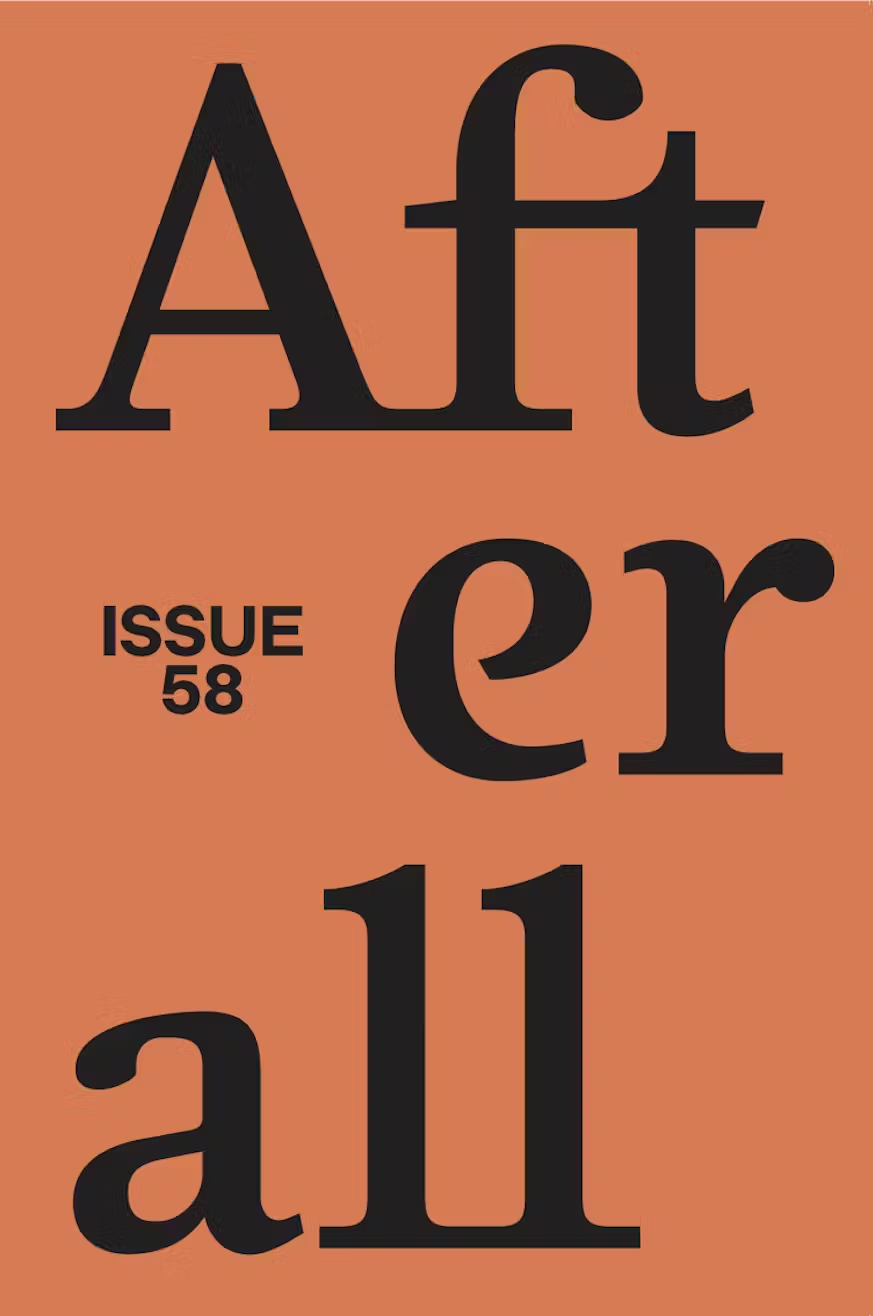
    Afterall Journal, Issue 58

    The fascination and anxieties surrounding AI are explored by Li Qi in his feature on artist Lawrence Lek. Focusing mainly on Lek’s two trilogies ‘Sinofuturism’ and ‘Smart City’, set respectively in virtual replicas of Singapore and Beijing, Qi coins the term ‘futuristic chinoiserie’ to compare the present moment of the global AI race with the fantastic visions of China that arose in post-Enlightenment Europe. As its historical counterpart, futuristic chinoiserie is a European imaginary, an orientalist projection in which past fascination has been replaced with fear and xenophobic sentiments. Yet, as Qi elaborates, in his being both outsider and insider, Lek (who is based in London and of Malaysian-Chinese descent) creates imaginaries that combine high-tech with Chinese traditions and Buddhist-Taoist paradigms – showing how technology is both enmeshed in global economic circuits and culturally coded through local beliefs and cosmologies.

    Published on AFTERALL JOURNAL, Issue 58, October 2025. Read the full Forward by Adeena Mey on afterall.org.

  • Review: Heman Chong

    Review: Heman Chong

    Heman Chong, 106B Depot Road, 2024, acrylonitrile butadiene styrene, 55 1⁄8 × 40 3⁄4 × 45 3⁄4″. Photo: Sun Shi.

    By Li Qi

    Heman Chong’s latest solo museum show, “The Endless Summer,” curated by Luan Shixuan, is staged in the northern Chinese county where the country’s top political leaders spend their summer holidays. It’s an Instagrammable beach resort renowned for a chapel with no clergy, a library crowded with nonreaders, and UCCA Dune, a satellite pavilion of Beijing’s flagship art institution. The museum’s anthill-shaped galleries are half buried in the town’s carefully controlled landscape—an approved simulation of nature. As a Singaporean, Chong should feel right at home in Beidaihe, which, as the artist told me, he sees as a paraphrase of Singapore’s success story in urban planning. Against the backdrop of China’s bursting real estate bubble, Chong has brought his “Endless Summer” to China’s economic winter, offering his favorite method for navigating life: through fiction.

    106B Depot Road, 2024, newly commissioned for the show, materializes Chong’s conceptual transpositions. The artist described in detail the Singaporean public-housing block where he lives to an architect who, interpreting these descriptions, re-created the building in two ghostly white plastic models, each about waist height. Transformed from a tangible place and memory into an abstracted idea and representation, the building’s stacked modular forms embody the complexities of Singapore’s ascent. Beyond urban spectacle, Chong’s project reconstructs a symbol of Singapore’s social experiment in state-capitalist nation building. As the global Bitcoin-rich eye Singapore for its secret formula for accumulating wealth while maintaining social responsibility, these concrete edifices stand as both puzzles and testaments.

    Chong’s investigation into real estate and ideology touches a nerve: How can socioeconomic development sustain itself, and what are the consequences when growth slows? Shot in a long-format video, Tanglin Halt Green (A Survey), 2023, documents a large 1970s public-housing compound awaiting redevelopment. The deserted site stands in haunting beauty—a relic of Singapore’s dutiful past and rejuvenated future. These silent monuments echo loudly in Beidaihe, where China’s state ownership of land intersects with an economy heavily reliant on an overextended real estate sector. The piece was initially published on the artist’s YouTube channel as an ASMR video accompanied by the sound of torrential rain—here, it’s presented as a video installation—intended to soothe frayed nerves and insomnia. Elsewhere in the show, three circular benches in A Different Kind of Loneliness, 2024—crafted like display plinths using recycled materials—offer free seating on the museum’s porches, which open onto the resort’s expensive beach. Chong conceives his practice as a public service, producing works that blur the boundaries between utility and art.

    Chong is deeply engaged with print culture: The Library of Endless Journeys, 2024, features one hundred books on travel and migration; Perimeter Walk, 2013–24, comprises 550 postcards documenting Singapore’s seemingly endless coastline; and Monument to the people we’ve conveniently forgotten (I hate you), 2008, includes one million blacked-out business cards. Paperwork, 2024, transforms five hundred rusted-iron plates, each the size of an A4 sheet of paper, into a mandala symbolizing bureaucracy. Collectively, these works give a smart twist to the notion of “works on paper.” The bound, stacked, and spread-out pages emphasize the aesthetics of print—still an ideal medium for human connection and social exchange.

    Chong distills a spectrum of ideas and reflections into minimal gestures. In place of narrative climax and resolution, he builds anticipation and tension by suspending development and staying in medias res. Prospectus, 2024—fragments of black-ink text printed on eight white posters arranged in repetition and covering the walls of a gallery—forms both the physical and conceptual backdrop of the show. The work consists of 239 English words salvaged from the ruins of a novel of the same name, which Chong worked on and later scrapped in 2006. Each poster features a unique selection of disjointed phrases and clauses alongside their corresponding Chinese translations, reminiscent of pages torn from a Language-poetry anthology. This reconstruction exemplifies his approach to artmaking: creating fictions not for the sake of the story itself but for the traces and formal wreckage left behind.

    Published on ARTFORUM, April 2025, Vol. 63, No. 8. Read the original on artforum.com.

  • International Roundtable:The Possibility of Collaborating in a Divided World

    The Agency for Cultural Affairs is pleased to announce its International Roundtable: The possibility of Collaborating in a Divided World, scheduled to take place on February 16, 2024 at the National Art Center, Tokyo. The aim of this roundtable is to discuss specific ideas for building an international network of curators from/in Asia region among the next generation, as well as involving artists and researchers, and creating new collaborative possibilities in the mid- to long- term perspective. In Session 1, we welcome Ms. Kataoka Mami, Ms. Kim Sunjung, and Dr. Pi Li as panelists to explore international networking and collaboration in the coming era through case studies of international collaborative projects since the early 2000s. In Session 2, following the presentations, the three panelists and participating curators will join the discussion.


  • Essay: Ugo Rondinone

    example

    Installation view, Ugo Rondinone, “BURN TO SHINE,” Fosun Foundation, Shanghai, 08 November 2023 – 01 January 2024 © Ugo Rondinone. Courtesy of studio rondinone and FOSUN Foundation; Sadie Coles HQ, London; Gladstone, New York; Kukje Gallery, Seoul; Mennour, Paris; Galerie Eva Presenhuber, Zürich; Esther Schipper, Berlin.

    By Li Qi

    A beat—compact, persistent, and full of life—emanates from the depths of darkness. Interwoven with flickering light, it beckons the inquisitive mind on a journey into the unknown. Thus the Swiss artist Ugo Rondinone’s exhibition at the Fosun Foundation captivates visitors through sound, with this acoustic overture setting the stage for the film burn to shine—the pulsing heart of a selection of works made over the past four years, which now converges with the eponymous exhibition.

    The evocative title, burn to shine, hails from a poem “You must burn to shine” by Rondinone’s late partner, John Giorno. While this phrase likely traces its roots to the Sanskrit word तप् (tap) meaning “to shine; to be burnt”, in a broader sense, it gestures towards the path to liberation through bodily penance known as तपस् (tapas), a meditative and self-disciplinary Buddhist practice. Yet Rondinone’s film does not dwell on suffering; instead, it pulsates with fervent celebration. Orchestrated by Franco-Moroccan choreographer Fouad Boussouf and brought to life by percussionists and dancers, the film references a panoply of spiritual rituals; prevalent across cultures, these practices resonate with myths of regeneration through fire. In the synchronised video projection in the exhibition, the six monumental screens form an enveloping circle, which is augmented by darkened window foils that occlude external views, thereby creating a sanctuary that nurtures a meditative experience.

    While burn to shine portrays the cyclical motion of sunrise and sunset in an infinite loop, this motif is also echoed in the Mattituck series, inspired by the Long Island locale where Rondinone has a home and studio. These fourteen paintings, spaced evenly apart, evoke the face of a sundial, representing the perpetual dance of the sun and the moon. Each painting captures, through a triad of harmonious or contrasting hues, a moment of natural phenomena, their dimensions intimate and reminiscent of a personal journal: imbued with a gentle melancholy, the paintings offer reflections on the passage of time. Varying in size, they are aligned along the walls at the horizon line—where painted skies touch the sea.

    Installation view, Ugo Rondinone,“BURN TO SHINE,” Fosun Foundation, Shanghai, 08 November 2023 – 01 January 2024 © Ugo Rondinone. Courtesy of studio rondinone and FOSUN Foundation; Sadie Coles HQ, London; Gladstone, New York; Kukje Gallery, Seoul; Mennour, Paris; Galerie Eva Presenhuber, Zürich; Esther Schipper, Berlin.

    This horizon extends even to the horses sculptures that inhabit the gallery floor. Appearing at the juncture of their upper and lower parts, the horizon offers up the illusion of air and water respectively. The works’ equine forms, moreover, represent the earth, while their glass bodies were cast out of fire. Together, they symbolize the four natural elements essential to the artist’s creation. Named after the world’s oceans, the works also suggest a Romantic notion of a voyage. Ultimately, these sculptures prompt viewers to appreciate the dynamic dualities often embedded in Rondinone’s work: here, abstract fluidity paired seamlessly with tangible solidity.

    Another duality emerges in the seven bronze sculptures, standing sentinel just under three meters tall on the roof terrace overlooking the Huangpu River. Their natural rock textures are recast and painted in an aggressive DayGlo palette, with nature’s delicate equilibrium transformed into monuments of artifice. Part of the nuns + monks series, these sculptures draw inspiration from the geologic wonders called hoodoos, rock pyramids forged by natural erosion. These stacked figures exude the gravitas of holy sages, offering a compelling juxtaposition against the gleaming skyscrapers along the riverbank. Meanwhile, an eighth sculpture, one meter higher than the group, stands poised at the ground level entrance, a public sculpture inviting shared contemplation, its pink and yellow colors radiating optimism.

    In sum, Ugo Rondinone’s exhibition “BURN TO SHINE” unfurls a holistic experience that pulsates from dusk to dawn, from the oceans to the sky, and from the individual to the collective. Rooted in the fundamental motif of landscape, the artist’s works transform the marvels of nature into simple yet sublime subjects, existentially capturing the profound emotions thus elicited.

    Installation view, Ugo Rondinone, “BURN TO SHINE,” Fosun Foundation, Shanghai, 08 November 2023 – 01 January 2024 © Ugo Rondinone. Courtesy of studio rondinone and FOSUN Foundation; Sadie Coles HQ, London; Gladstone, New York; Kukje Gallery, Seoul; Mennour, Paris; Galerie Eva Presenhuber, Zürich; Esther Schipper, Berlin.